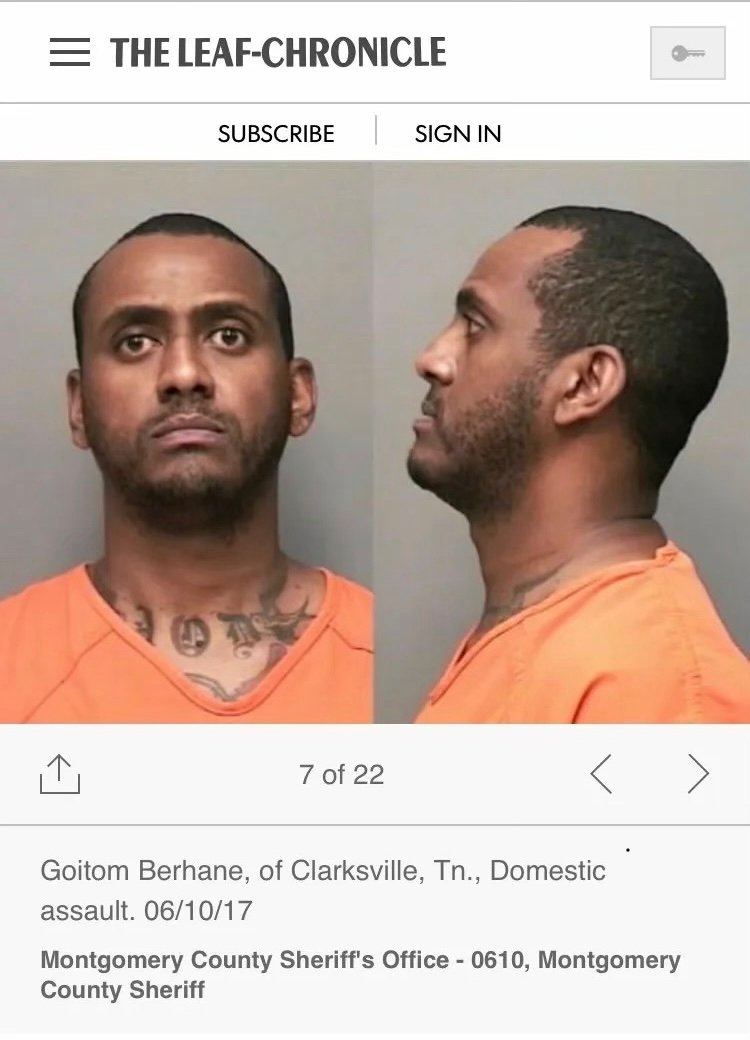
Everything you'd find if you went looking. I'm giving it to you first.
Every candidate who has ever had a record has had two choices: get ahead of it or get buried by it. Getting buried means a journalist finds it, a political opponent leaks it, and suddenly your past is being described in someone else's words with someone else's framing for someone else's purpose.
I am not giving anyone that opportunity. This photo is on my campaign website — the one I built, the one I control — because the record belongs to me and the explanation belongs to me. No spin. No selective disclosure. No "I'd like to address something that may come up." It is already up.
If you want to know who I am, start here. Then keep reading.
No omissions. No context-first framing to soften the lead. Here is what is on my record, in chronological order.
I was about to leave Hawaii for the 75th Ranger Regiment. I made a stupid decision. There is no excuse for it and I am not going to offer one.
What I will tell you is that I shook the officer's hand when he arrested me. I meant it. That stop was the wake-up call I needed before I walked into one of the most demanding assignments in the Army and destroyed a career before it started. I have looked back on that night as one of the better things that happened to me — not because getting a DUI is something to be proud of, but because of what I chose to do with it. I shipped out clearer than I would have been otherwise.
I was charged in Minneapolis in 2007 in connection with a physical altercation. I was in my twenties. I was in an environment and a headspace that put me in situations I had no business being in.
I am not going to dress it up. I got into a fight. I was charged. That is the record. What came after that charge was a slow process of figuring out who I actually wanted to be — and that process took time and cost me things I did not get back.
In June of 2017, I was arrested and charged with domestic assault in Montgomery County, Tennessee. The case was dismissed. I was not convicted. No court found me guilty of domestic assault. The charge was real. The arrest was real. The dismissal is also real — and it belongs in the same sentence.
I have no contact with my ex-wife and likely never will again. I am not speaking for her, and she is not part of this campaign. I am not going to use this page to litigate the details of that night or shift what happened onto anyone else. What I will say is this: that arrest was the hardest stop sign I have ever hit. It forced a reckoning I had been avoiding for years. The work I did after 2017 — the accountability, the rebuilding, the commitment to my marriage and to becoming a different man — is not something I can prove to you on a webpage. You are going to have to watch how I operate. That is fair.
There is something that will not appear in any arrest record, any court filing summary, or any opposition research document — because it is not a charge. It is a loss. I have two daughters. I have not seen them since 2019. One is twelve years old. The other is about to turn eighteen. I have missed years I am not getting back.
I am putting this on this page because it is part of the full picture. And because my story is not unique. There are thousands of fathers in Minnesota sitting in the same place I am sitting — not because they abandoned their children, but because the system, the programs, and the people around those programs made it nearly impossible to hold on to rights they already had.
The Safe at Home program is administered by the Minnesota Secretary of State under Minnesota Statutes Chapter 5B. It assigns participants a PO Box as their legal address, which all public and private entities — including courts — are required to accept. No one can compel a participant to disclose their real location.
Here is the part that matters: according to Minnesota state policy, a person is not required to provide proof to enroll. A stated fear is sufficient. There is no verification process, no investigation, no burden of evidence. The program's own documentation confirms this directly. Once enrolled, releasing a participant's information — including simply confirming or denying their participation — requires a court order. (Minnesota DHS Eligibility Policy Manual, Section 1.3.1.4.)
What that means in practice: a parent can enroll, disappear with children, and the other parent has no legal mechanism to locate them — regardless of what a custody order says, regardless of what actually happened, regardless of what the court knows. The program was designed to protect genuine survivors of violence. It has also become a tool that can be used to vanish with children and leave the other parent with no recourse short of expensive, slow, uncertain litigation against a system that is structurally set up to defer to the enrollee.
In court, my military career — the 75th Ranger Regiment, the training, the deployments — was used against me. Not as evidence of discipline or sacrifice. As evidence of danger. The argument, made repeatedly from the stand, was that my background made me someone to be feared. That I was violent. That my daughters were not safe with me.
Those claims were not supported by evidence because there was no evidence. They were accusations. But in family court, accusations carry weight — especially when the system is already oriented toward one outcome, when advocates are lined up on one side, and when a program exists that makes physical location legally untouchable.
The court saw the dynamic. It did not correct it. It continued. My daughters have reached out to me — but contact has been inconsistent, and what comes through carries the mark of years of one-sided narrative. That is not a reflection of who my daughters are. That is what prolonged parental alienation looks like. I know what I know. I also know what I cannot prove from the outside of a program designed to keep me outside.
I did not abandon my daughters. The system made it extraordinarily difficult to stay connected — and then used my distance as further evidence against me. That is the cycle. It happens every day in Minnesota family courts. I am not the only one.
Multiple orders for protection were filed against me across three different states. I am disclosing this because it will come up — and because the full story is in the outcome, not the filing.
Not one judge, in any of those three states, made an actual finding against me. The orders were not granted on merit. No court — after reviewing the claims, the evidence, and the circumstances — found sufficient grounds to issue a ruling against me.
I am not going to characterize the motives behind each filing. I am going to let the judicial record do that. When the same pattern plays out across multiple jurisdictions and every single judge reaches the same conclusion, that is not a coincidence. That is a record. The filings are real. The findings are not — because there were none.
I did not write Directive 02 from a policy paper. I wrote it from this. From six years of watching a system that was supposed to protect children instead be used as a weapon against the parent who would not go away quietly. The directive addresses the verification gap in programs like Safe at Home, the weaponization of military and professional backgrounds in custody proceedings, and the structural bias in family court that leaves fathers — and some mothers — without a legitimate path back to their children.
Every detail I own is a detail no one else gets to define. This is one of the hardest ones. It is also one of the most important ones — because if it happened to me, and I am the one running for Governor, imagine how many people it is happening to who have no platform, no voice, and no directive with their name on it.
Read Directive 02 — Family Rights →Someone will bring this up. My ex-wife. An opposition researcher. A reporter who went digging. I am not going to let them be the ones who define it. This is mine to tell.
By the time I was in the final stretch of my military career, I was in trouble and I knew it. Depression had moved in quietly. I started isolating — from my unit, from people who cared about me, from everything. I was drinking every night. I never drank at work, but I was coming in late. I was doing things that were out of character for me. I had also used other substances during this period. I am not going to name them because I do not think the specific substance is the point. The point is that I was a man using whatever was available to avoid feeling what I was feeling — and it was working just well enough to keep me from asking for help.
I had been debating it for weeks. Going to your chain of command in the military and saying "I need help" is not a small thing. There is a cost to that conversation and every soldier knows it. I went back and forth on it longer than I should have.
On August 1, 2019, I walked in and asked for help. That same afternoon I was sent to a one-month residential treatment facility at an Army hospital. I went voluntarily. Nobody ordered me there. Nobody caught me. I made the decision myself, at the bottom of a very long slide, and I walked through the door.
I am telling you this because it is going to come up — and because I think it matters that when I finally hit that wall, my instinct was not to hide, cover, or deflect. It was to ask for help and deal with it directly. That is the same instinct I am bringing to this campaign and to the office of Governor. When something is broken, you name it, you get in front of it, and you do the work. That is the only way through.
About a year and a half before I retired from the Army, I was prescribed Marinol — a synthetic THC — for pain management and mood. I was skeptical at first. I did not want it. But I tried it, and it worked. That prescription was the beginning of my relationship with cannabis as a therapeutic tool, not a recreational one.
When I retired and came back to Minnesota, I assumed that since the Army had prescribed it, the VA would continue it. That is not what happened. I was told the VA would not touch Marinol unless it was being used for the condition it was originally marketed for — cancer patients. My situation did not fit that box, so they would not prescribe it. I went looking for civilian doctors. Some made it difficult. Some said no outright — not on medical grounds, but because they were personally against it and would not prescribe it under any circumstance.
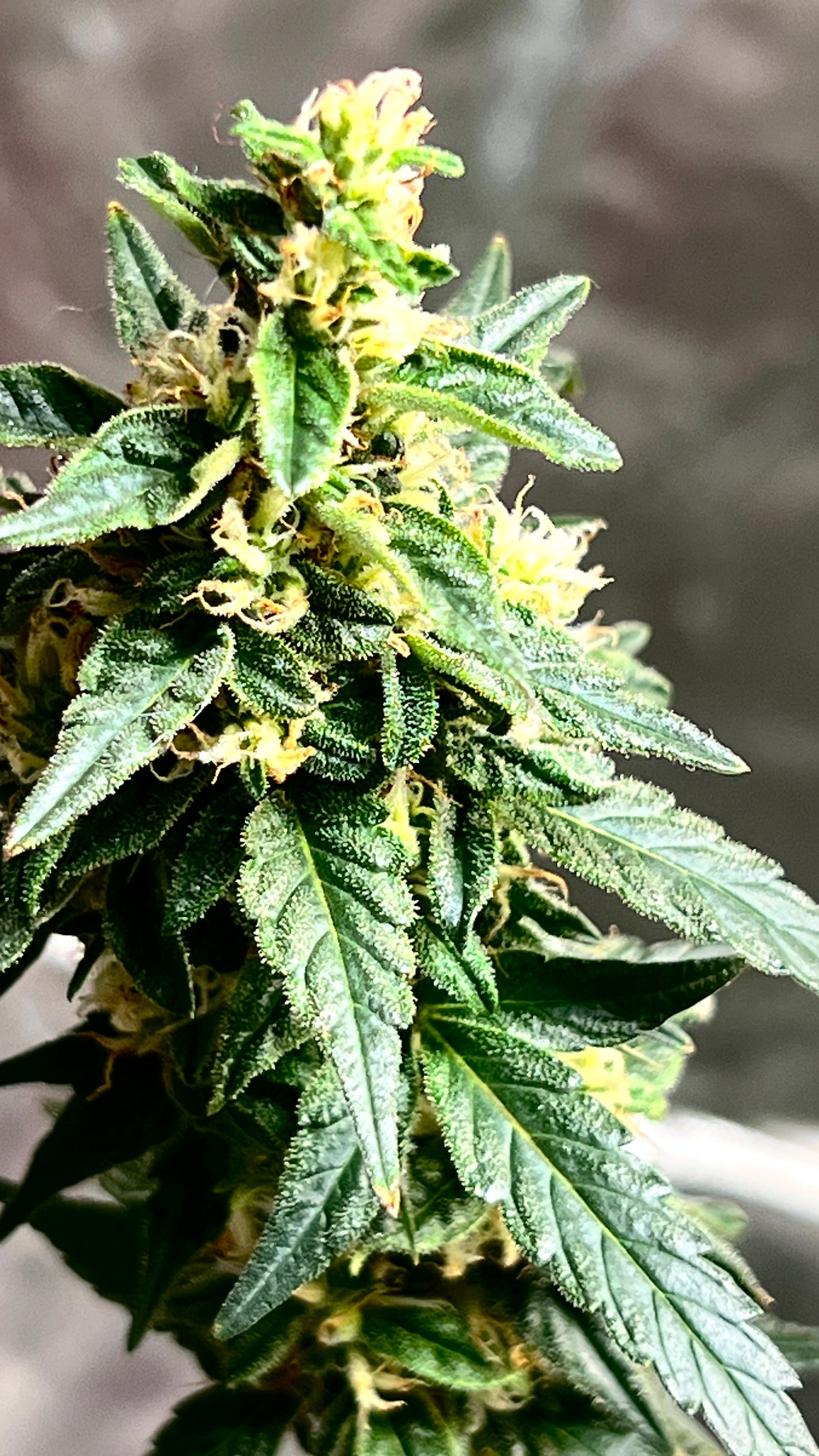
So I was a veteran who had been given something by the Army that worked — for pain, for mood, for sleep — and when I came home the system that was supposed to take care of me refused to continue it. That is when I tried growing my own. That is my plant in the photo. I will not be quitting my day job to become a cultivator. But I am also not going to pretend the path that got me here was reckless. It was a veteran problem-solving after the VA and the medical system left him with nothing.
It is legal in Minnesota. I use it. I smoke in my driveway in my car during the cold months because I do not smoke inside my house. My neighbor across the street can see me do it. I am not hiding it from her and I am not hiding it from you.
I advocate for the cannabis industry through Directive 07 because I have lived the gap the system leaves behind. A veteran prescribed synthetic THC by the Army, turned away by the VA, refused by civilian doctors, left to find a legal solution on his own — that is not an edge case. That is policy failure. Minnesota can do better and on day one it will.
I will not consume cannabis as a sitting Governor. This is not a political calculation. It is a standard I am setting for myself in that office. The role demands full clarity at all times and I will hold myself to that without exception. My personal use today and my policy position on the industry are completely separate from how I will conduct myself in office. The plan in front of you does not change. The directives do not change. The commitment does not change.
In August of 2022 I was living alone in Oklahoma City. My current wife and our daughter — she was about to turn one — were not with me. I had spent tens of thousands of dollars on attorneys trying to get a judge to enforce custody rights that were already written into the court order for my daughters in Tennessee. The judge would not move. The money was gone. The girls were still unreachable. I was completely isolated.
I fell into the darkest place I have ever been. I am not going to dress it up — I had thought it through. I had a plan. I was at the end of what I thought I could carry.
I was watching television and a commercial came on for 988, Press 1 — the Veterans Crisis Line. It was a new campaign. I had seen the number before but something about that moment, that ad, that night — I picked up the phone. I called.
I spent about a week in the OKC VA psychiatric ward after that call. I needed it. I was not okay and I was finally in a place where someone could make sure I did not stay that way.
I look at that night as the moment God made clear He was not finished with me. I do not say that lightly and I do not say it for effect. That is what I believe. The line was there. I used it. I am still here because of it.
Every other candidate in this race will tell you mental health matters. None of them have been in the ward. None of them made the call. I have. Directive 11 — Men's Mental Health and Suicide Prevention — exists because I know what it feels like to be at the end of the rope with no visible way out. I also know what it feels like when a line picks up. Minnesota needs a Governor who understands both sides of that phone call. I am that Governor.
Read Directive 11 — Men's Mental Health →The instinct to hide a record is the same instinct that produces closed-door budget decisions, redacted public records, and agencies that operate without scrutiny. I have built an entire platform — 13 directives — around the principle that residents deserve to see everything. That principle has to start with me. If I will not disclose my own record, I have no business demanding disclosure from state government.
Every person reading this has something in their past they are not proud of. The question was never whether the thing happened — it happened. The question is what you did after. I did not run. I did not minimize. I did not reinvent a narrative. I stayed in it, did the work, repaired what could be repaired, and kept moving. That is the same standard I will hold state government to.
There will be people who believe this record disqualifies me. I respect that. What I will not accept is a process where political operatives, opposition researchers, or a compliant press corps get to make that determination for you — by dripping out information on their timeline, with their framing, for their purposes. You have the full record now. The judgment belongs to you.
I have not named anyone involved in any of these charges. I have not described events in ways that would identify or re-expose anyone. What I have made public is mine — the arrests, the charges, and what I did afterward. Everyone else in these situations is a private person and they stay that way. This disclosure is about my record and my accountability. Full stop.
The version of me that existed in 2003, in 2007, and in 2017 was a man at different stages of the same unfinished work. I grew up hard. I made choices that reflected that. I hurt people — and I have had to sit with that in ways that do not get easier just because time passes.
By 2019 the weight of all of it had caught up with me. The isolation. The drinking. The substances. The daughters I could not reach. The depression I had been outrunning for years finally stopped moving when I stopped. On August 1st of that year I walked into my chain of command and asked for help. That is not a comfortable sentence to put on a campaign website. It is the truest one on here.
What came after that was slow and it was not linear. But it was real. I am not standing here telling you I have it all figured out. I am telling you I did the work, I kept showing up, and I am still here — running for Governor of the state I intend to fix, carrying every bit of this openly.
My daughters are part of that story. The hardest part. I am not going to pretend that section of this page was easy to write, or that writing it resolves anything. It does not. But if I am asking Minnesota residents to trust me with the governance of this state, they deserve to know what I have been carrying — and what I intend to do about it from the Governor's office.
But you have a right to know who is asking for the job. Now you do. The rest is up to you.
You made it through the hardest page on this site. That means something. The campaign is built for people who can handle the full picture — residents who are done with curated politicians and ready for someone who operates in the open. If that is you, we have work to do.
You know who is asking. Now see what they're asking for — 13 specific commitments to the residents of Minnesota.
Read All 13 Directives